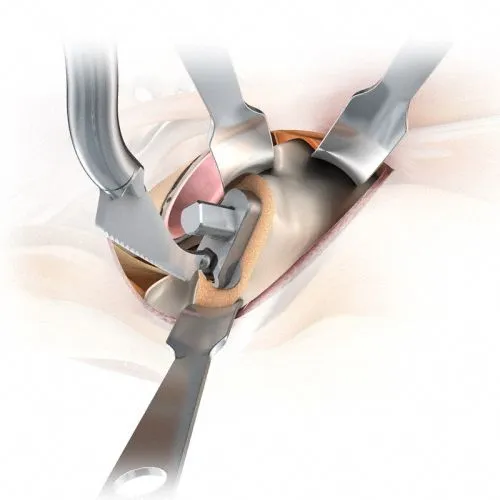
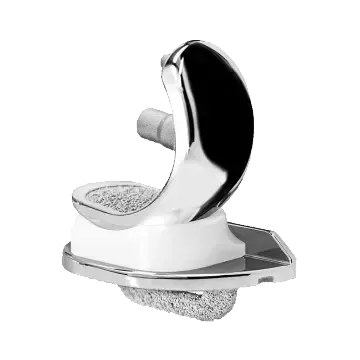
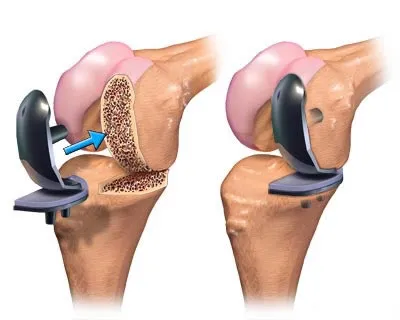
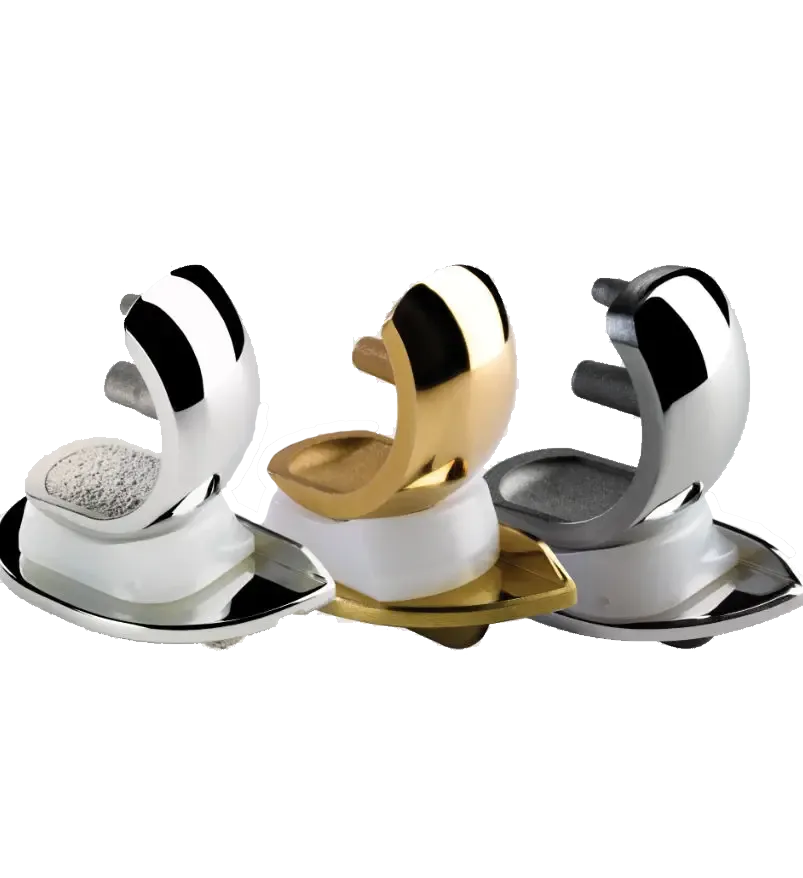
Thanks to specialized instruments and a new surgical approach, it is possible to implant a knee replacement through a much smaller incision. This results in less bleeding, less damage to soft tissues and muscles, and a faster recovery.
The main advantage of this method, known as minimally invasive surgery, is that the surgeon does not cut the quadriceps tendon or aggressively separate the muscles at the front of the leg, but rather works between them. By preserving the integrity of the surrounding anatomy, the following is achieved:
Less bleeding both during the operation and in the immediate postoperative period.
Minimal damage to soft tissues and muscle structures, which drastically reduces pain after the procedure.
A much faster recovery, allowing the patient to stand up, put weight on the leg, and begin rehabilitation almost from the very first day, which significantly shortens the hospital stay.
This surgical technique cannot be performed on all patients.