General Information about the Hip
Anatomy of the Hip
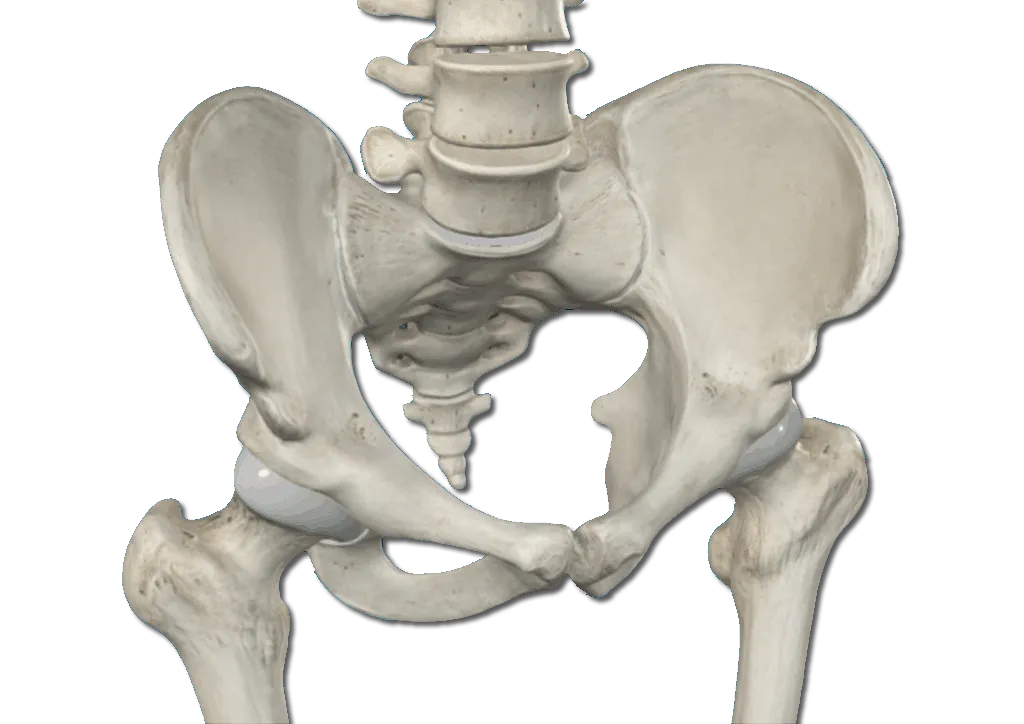
The hip is one of the major joints and consists of two main parts: the femoral head, located at the top of the femur, which articulates with the acetabulum, which is located in the pelvis.
This joint performs the following movements: flexion, extension, abduction, adduction, internal and external rotation, and circumduction.
In healthy hips, these bony ends are covered by cartilage, a cushioned, elastic tissue that allows for free, painless movement at the joint.
The main hip disorders and conditions can be grouped according to their cause:
1. Wear and Degeneration
- Hip osteoarthritis (coxarthrosis): This is the most common condition. It involves the progressive wear and tear of the articular cartilage (the tissue that cushions the ends of the bones). As the cartilage wears away, the bones rub directly against each other, causing pain, stiffness, and loss of mobility, especially when standing up or walking long distances.
2. Structural and Mechanical Injuries
Femoroacetabular impingement (FAI): This occurs when there is an abnormality in the shape of the hip bones (either in the femoral head or the rim of the acetabulum). This misalignment causes abnormal friction during movement, which can damage the cartilage and the labrum. It is a common cause of groin pain in young adults and athletes.
Labrum tear: The labrum is a flexible ring of cartilage that surrounds the rim of the acetabulum to provide greater stability to the joint. It can tear due to trauma, repetitive movements, or as a result of femoroacetabular impingement.
Avascular necrosis of the femoral head: Also known as osteonecrosis, this condition occurs when blood flow to the head of the femur is temporarily or permanently interrupted. Without a blood supply, the bone tissue dies, and the bone may eventually collapse, causing sudden, severe pain.
3. Soft Tissue Inflammation
Trochanteric bursitis (trochanteritis): This is inflammation of the bursae, small fluid-filled sacs that act as cushions between the tendons and bones to reduce friction. The characteristic pain is located on the outer side of the hip (the greater trochanter) and usually worsens when lying on that side or when climbing stairs.
Tendinopathies: Inflammation or overuse of the tendons surrounding the joint; those affecting the iliopsoas tendon or the gluteal muscles are very common.
4. Trauma and Emergency Care
- Hip fractures: Very common in older adults due to osteoporosis, usually caused by a free fall from standing height. In young people, they are often associated with high-impact accidents. They require immediate medical attention.
More Information