


The hip is subjected to compressive forces at the superoexternal aspect of the acetabulum and the femoral head. It is here that joint changes are most frequently observed and are most severe. Greater wear of the acetabulum (horizontal zone) is found at this level, compared to the vertical zone, where wear is less common.
Hip Osteoarthritis
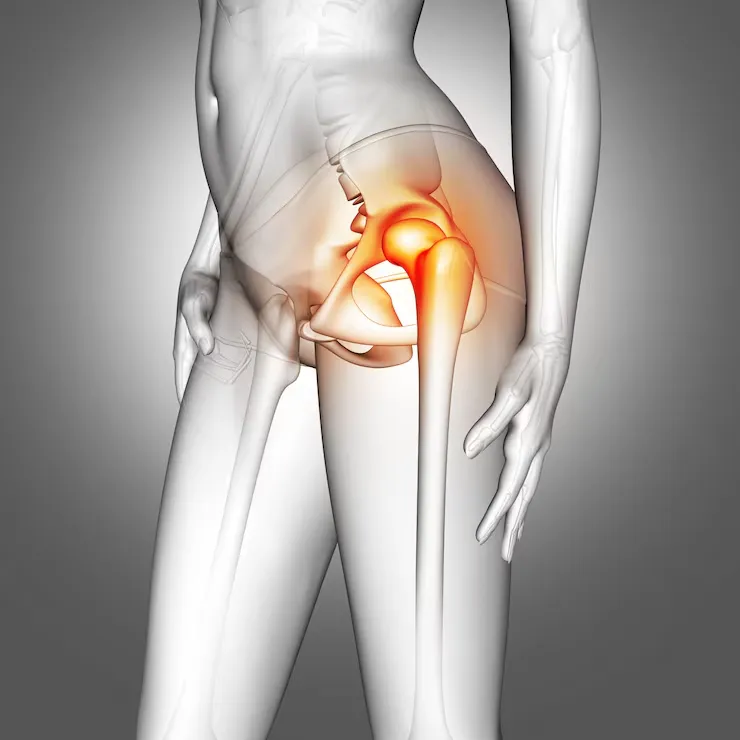
One of the most common causes of chronic hip pain is osteoarthritis. The most common types of osteoarthritis include: osteoarthritis, degenerative arthropathy, osteoarthrosis, and deforming osteoarthritis, among others.
Osteoarthritis is a degenerative process that affects hyaline cartilage, which becomes thinner due to a loss of its ability to retain water. On a plain X-ray, the joint space appears narrowed.
As the acetabular and femoral head cartilage gradually lose height, subchondral sclerosis develops, which represents one of the ways the bone reacts to the breakdown of hyaline cartilage.
As a person ages, the incidence of hip osteoarthritis increases. However, age is not the only factor contributing to the development of osteoarthritis; wear and tear, as well as certain local and systemic conditions, also play a role.
In a young hip, the cartilage is smooth, transparent, thick, and steel-colored. With use, this cartilage becomes thinner, more opaque, less elastic, less lustrous, and yellowish. On weight-bearing surfaces, it becomes less smooth.
A closer look reveals fibrous cartilage, with even small areas where it has detached from the surface.
Around the age of 55, ulcerations and erosions may be observed that leave the subchondral bone without its cartilaginous covering, without any known pathological changes, simply due to wear and tear (joint aging).
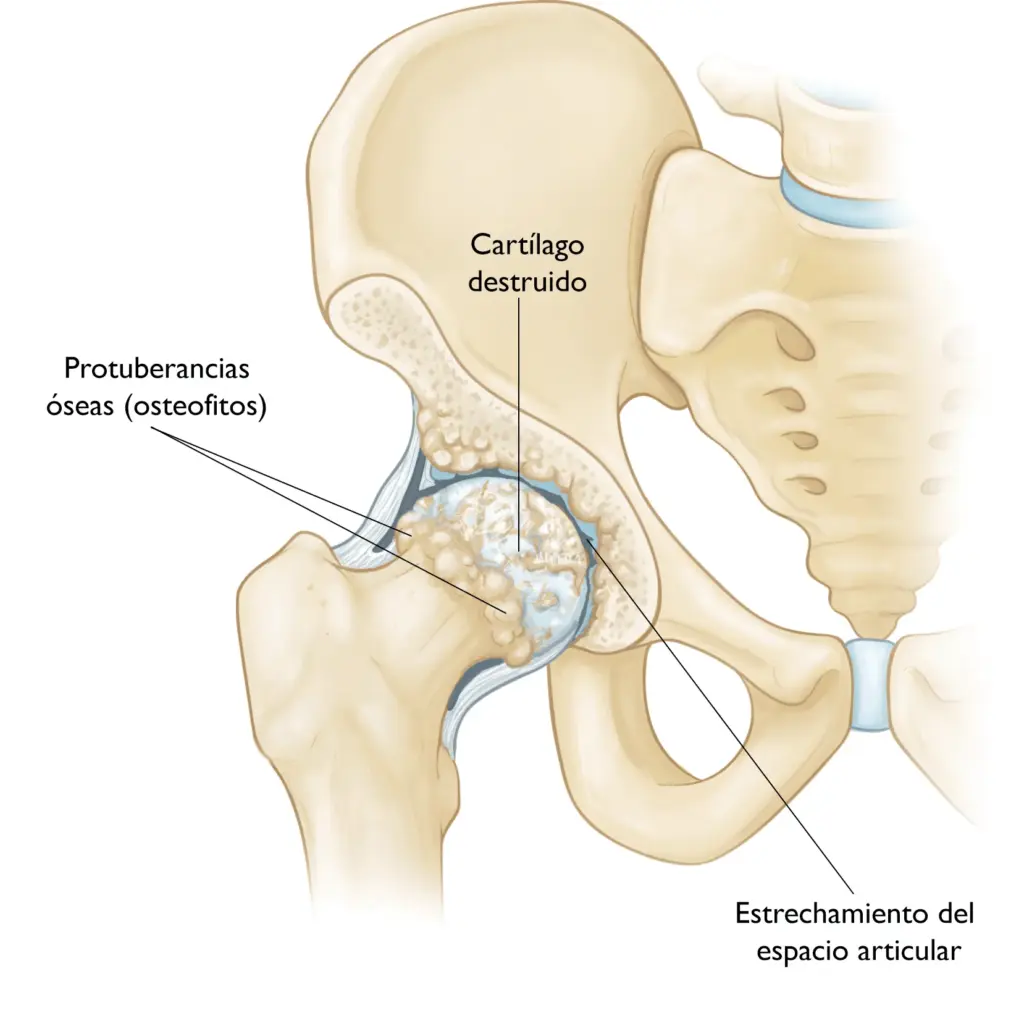
In a young hip, the cartilage is smooth, transparent, thick, and steel-colored. With use, this cartilage becomes thinner, more opaque, less elastic, less lustrous, and yellowish. On weight-bearing surfaces, it becomes less smooth.
A closer look reveals fibrous cartilage, with even small areas where it has detached from the surface.
Around the age of 55, ulcerations and erosions may be observed that leave the subchondral bone without its cartilaginous covering, without any known pathological changes, simply due to wear and tear (joint aging).
The hip is subjected to compressive forces at the superoexternal aspect of the acetabulum and the femoral head. It is here that joint changes are most frequently observed and are most severe. Greater wear of the acetabulum (horizontal zone) is found at this level, compared to the vertical zone, where wear is less common.